
Attack Index and the organisers of AI in Defence Summit 2027 have reached a partnership agreement. Attack Index’s status is Hybrid Threat Intelligence Partner. The partnership connects research on Russia, Ukraine and the security implications of Russian aggression for Europe with the community that builds, buys, funds and regulates defence technology.
The first publication presented as part of the partnership is Attack Index’s report, “Russia’s State Power Architecture: How the System Works”, the first volume in its 2025–2026 research series. The team is updating the material and preparing a special edition for AI in Defence Summit 2027. The edition will bring the findings to Summit participants and a wider professional audience.
Research details
The report consolidates twelve years of research and examines Russian state power as an interconnected system. It focuses on how political institutions, security and law-enforcement bodies, economic mechanisms, the information space and the Russian Orthodox Church work together to sustain centralised power, the war against Ukraine and the regime’s resilience under external pressure. The analysis goes beyond individual information campaigns to explain how decisions and tools across state institutions reinforce one another.
The study focuses primarily on Russia’s information space in 2025, with a retrospective covering trends from 2022 to 2025 and risk assessments and forecasts extending into 2026. It examines political groups and institutions, economic developments, stagflation and declining production, sanctions and sanctions circumvention, transport and logistics, imports of dual-use goods, technology and nuclear blackmail. Further sections address digital control, social processes, criminal proceedings relating to economic crimes, Russian policy towards Ukraine, and the activities of the Russian Orthodox Church in Russia and abroad.
The methodology combines systematised open-source data with quantitative and qualitative analysis. Automated monitoring and statistical and mathematical methods make it possible to trace topic dynamics, identify high-resonance events and assess links between information signals and institutional actions. This helps compare official narratives with economic, political and security developments.
Among the report’s findings is the consolidation of a centralised model of power in which legislative, judicial and law-enforcement institutions increasingly perform functions prescribed by the executive. Economic decisions, information campaigns, religious influence and domestic-control measures are analysed as parts of one mechanism. This approach allows analysts to compare open-source data, assess the system’s resilience and develop more precise risk scenarios for Ukraine, Europe and international partners.
Research results target audience
The report is intended for public authorities and security and defence professionals, think tanks, researchers, journalists and international partners. It can inform analytical publications and briefings, support decision-making and training programmes, and contribute to work countering disinformation. For journalists, the study offers story leads and multiple angles, from frontline developments and Russia’s economic outlook to religious influence and sanctions circumvention.
The report also follows specific mechanisms: how Russia adapts imports of dual-use goods to restrictions, how economic pressure affects production and logistics, and how nuclear rhetoric appears in the information space. It examines the digital rouble and the risks it may pose for state control over financial transactions. This makes it possible to look beyond official decisions to the channels through which they affect military capacity, society and the wider security environment.
AI in Defence Summit 2027
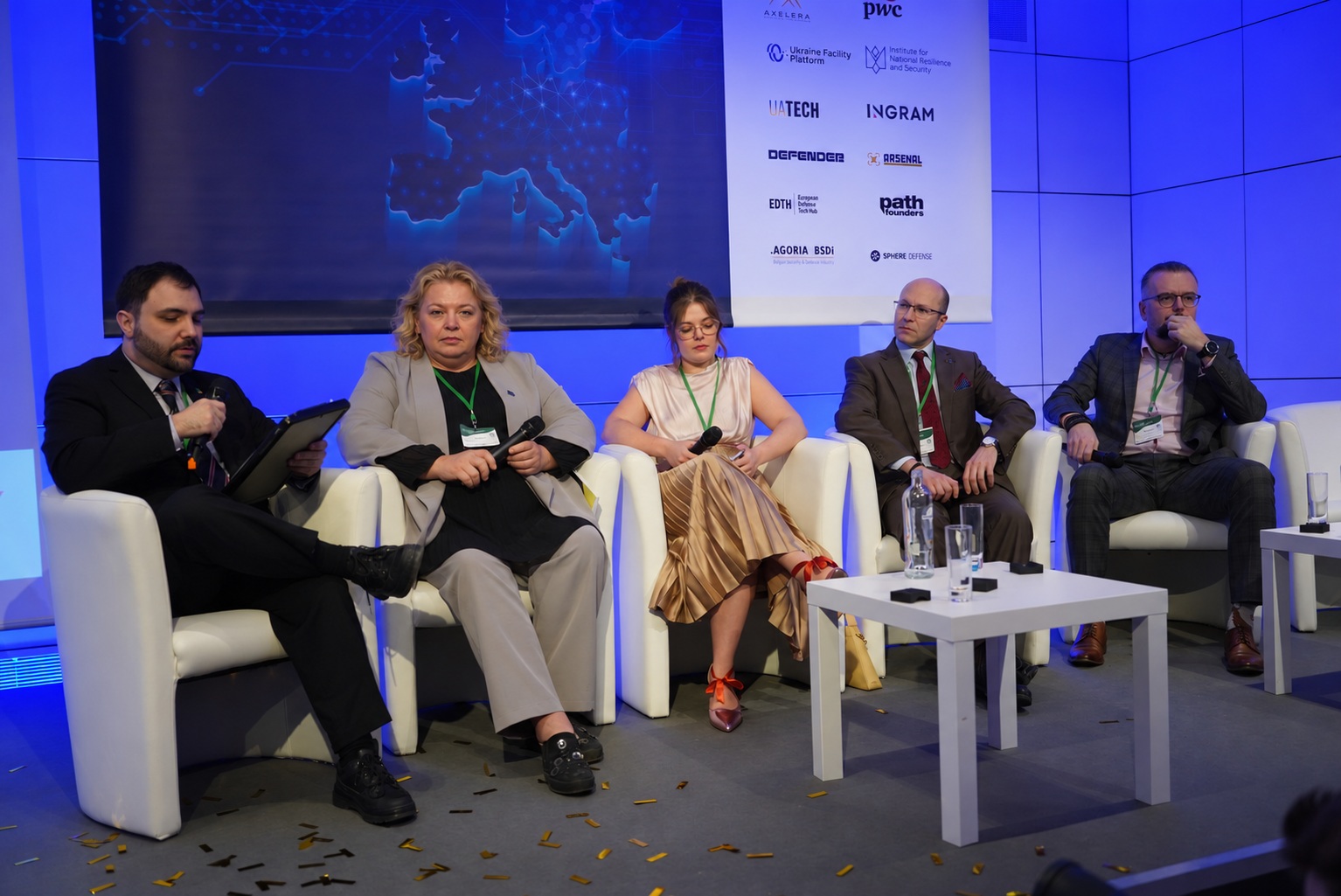
AI in Defence Summit 2027 will take place on 1 March at SQUARE Brussels. The organisers expect more than 1,000 attendees. The one-day programme includes 16 sessions; Summit materials list 53 speakers for the 2026 edition. In 2027, discussions will span three tracks: Capital & Policy, Hybrid Warfare, and Autonomy & Hardware. The Summit brings defence AI developers, investors, industry, policymakers and institutional representatives involved in setting rules and procurement into the same room.
The Summit partnership page argues that Europe’s front line also runs through its information space. Russian propaganda travels through state media, Telegram channels, proxy organisations and religious networks. Identifying individual fakes matters, but a durable response requires understanding the system that produces them and the links between its participants. This is where Attack Index research meets the Summit’s discussions on AI-enabled propaganda, hybrid attacks on critical infrastructure, and technologies that help defenders detect and counter these threats.
Throughout the year, Attack Index plans to share research with the Summit’s professional community and contribute to discussions on protecting critical infrastructure, developing Europe’s own defence technologies and countering information operations. Readers can request the full report by completing a short survey, which takes about five minutes. Responses will be used only in aggregate to identify the analytical products most useful to professional audiences and guide future research.
Report results request · Take the survey